Via ferrata
The first tourist Via ferrata was created in Austria in 1843. Subsequently developed by the Italian army to allow Alpine troops to cover mountain trails with heavy equipment, these facilities multiplied in Europe. In France, the first leisure-orientated Via Ferrata appeared in 1988.
An activity halfway between hiking and climbing
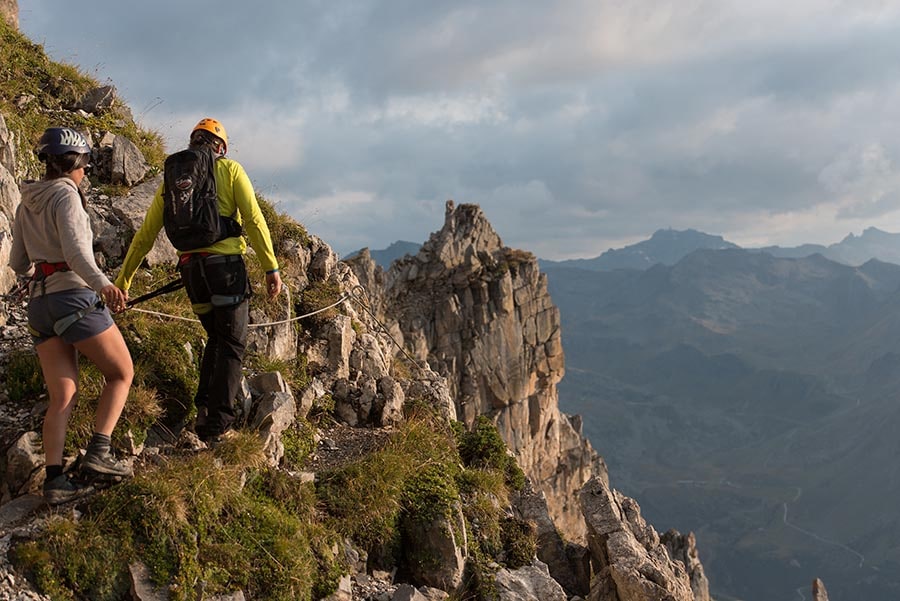
Mostly practised in highland areas, Via Ferrata combines hiking and climbing.
The adapted itinerary on a rocky wall is equipped with specific metal equipment to help the climbers continue along the route: rungs, ramps, nets, girders, walkways, rope bridges, etc.
For optimal safety, a cable (lifeline) secured like a handrail at different anchor points allows Via Ferrata climbers to self-belay.
The basics for practising Via Ferrata
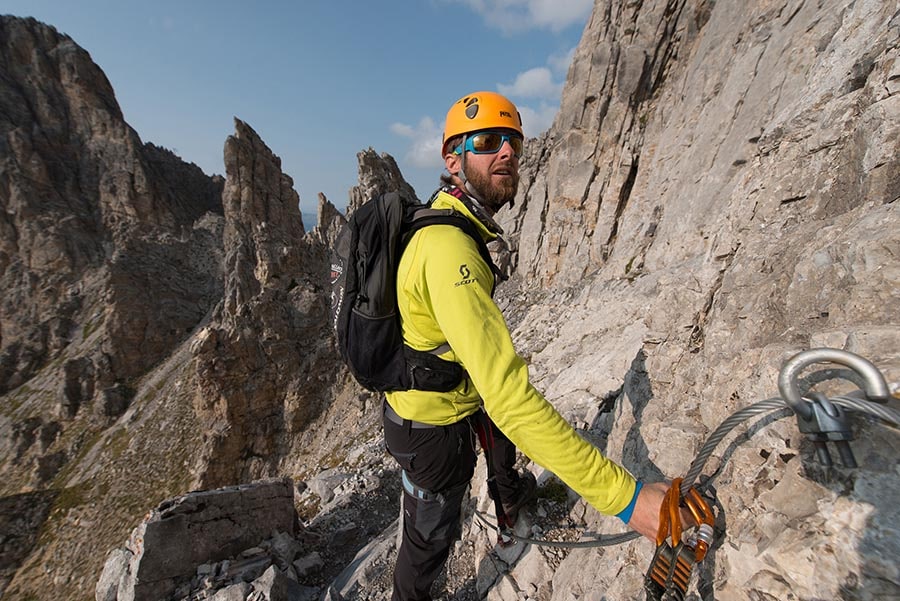
Climbers continue along the route while constantly attached to the cable using snap hooks on the Via Ferrata lanyard.
Thanks to the equipment, Via Ferrata does not require climbers to have any technical expertise.
However, it is a climbing sport. You therefore need to be in good physical condition, as well as strictly adhere to safety rules. And this goes for experienced climbers and those without vertigo!
If necessary, a professional on site can provide essential guidelines for a fun and 100% safe experience.
What do you need for Via ferrata?
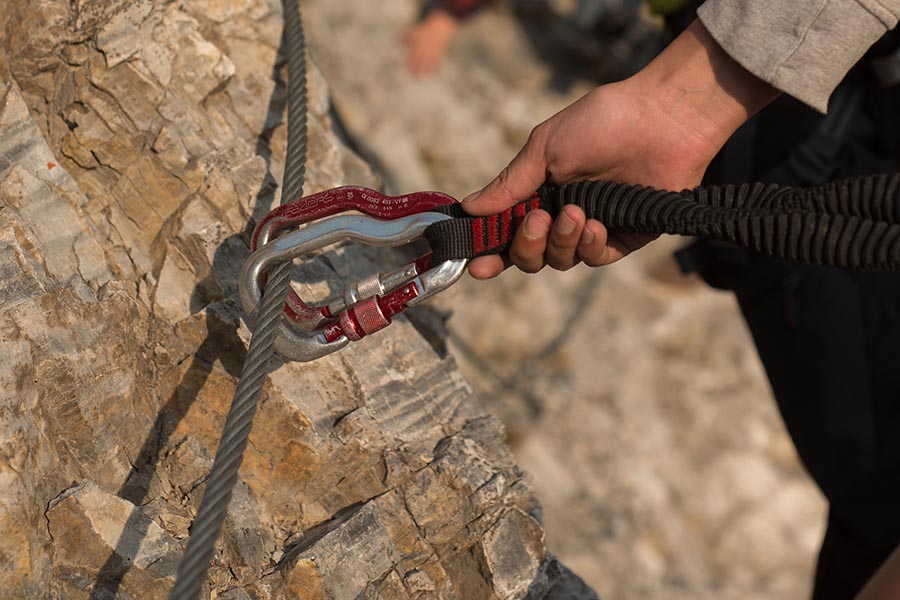
For comfort and safety reasons, it is important to have equipment that is adapted to the route and the climber’s experience.
Other than lanyards and the shock absorber specific to Via Ferrata, the equipment is essentially the same as that used in regular climbing and mountaineering.
- A climbing harness which enables the user to stay in a resting position and be restrained if they fall.
- Dynamic lanyards and an energy absorber. Always in pairs, the lanyards are attached to the harness via the energy absorber. The aim of the energy absorber is to absorb the shock caused by a fall.
- Snap hooks
- Helmet
- Pulley, essential for ziplines.
- Resting lanyard
- Gloves
- Versatile “trekking”-type footwear
- A rucksack with a map and topo guide of the itinerary, high energy food, water, a first aid kit, a charged mobile phone.
Difficulty levels
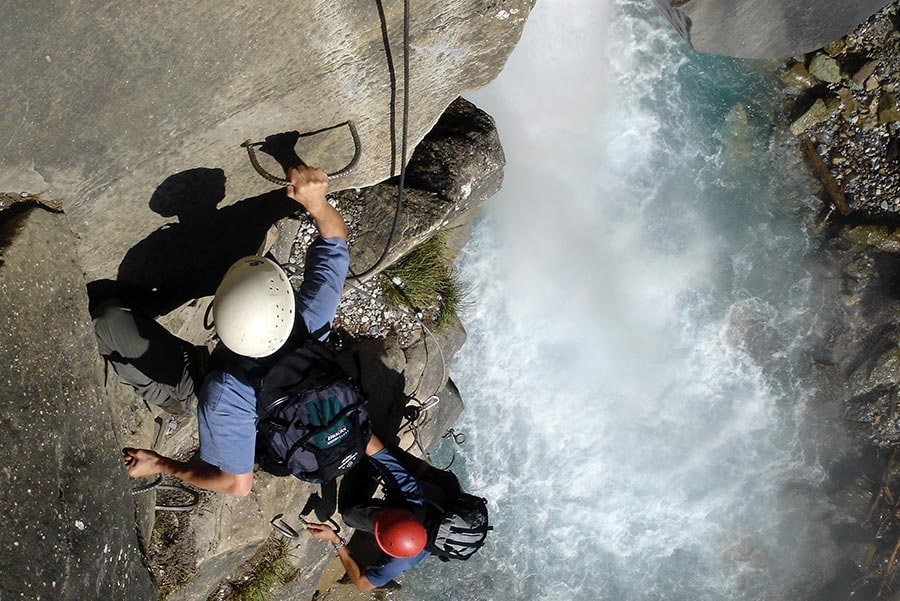
Traditionally, the difficulty levels in Via Ferrata are those used in all mountain sports: A (easy), B (moderately difficult), C (difficult), D (very difficult), E (extremely difficult).
However, they have been refined over time.
Via Ferrata is now subjected to more specific gradings taking into account the following criteria:
1 - Itinerary "styles" :
- School: Suitable for beginners, accessible to children.
- Sporty itineraries: acrobatic but without exposure to any significant risks.
- Mountain: in the highlands or high mountain ranges, requiring substantial alpine commitment (or “seriousness").
- Adventure: for mountain-climbers or alpine hikers only.
2 - Difficulty assessment
Each Via ferrata is also graded according to four criteria.
For each one, the grading goes from 1 to 4.
1 – Athletic : This is the most important factor which takes the steepness of passages and their repetition into account.
2 -Drop : Overview of the itinerary height, exposure to drops and its impressive nature.
3 - Equipment : This criteria evaluates the quantity and quality of the equipment, as well as the degree of contact required with the rock.
4 – The terrain.
NB :Before accessing a Via Ferrata, you must check the weather conditions. It can indeed be dangerous when rainy or stormy.
Beautiful Via Ferrata spots near Brides-les-Bains
Méribel
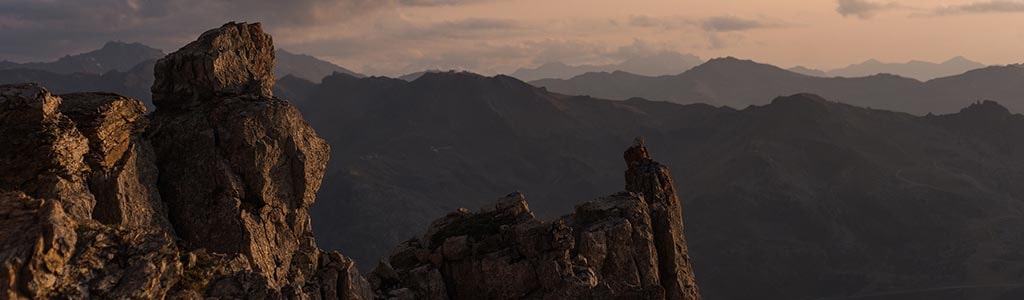
With the highest summit at an altitude of 2700 metres, the Dent du Burgin Via Ferrata (also known as Croix des Verdons) is the highest in France! It is accessible via gondola from Méribel Mottaret.
Courchevel Moriond
The Lac de la Rosière Via Ferrata can be done from age 8. Two hours long, it reveals a beautiful itinerary overlooking the La Rosière lake.
Champagny
The Plan du bouc Via Ferrata is a beautiful vertical hike in the heart of La Vanoise.
Pralognan
On the site of the Cascade de la Fraiche waterfall, the dizzying Pralognan Via ferrata is freely accessible to experienced climbers, or accompanied by a guide.
Guaranteed thrills!
NB : in most cases, there are picnic areas near the via ferrata sites.
Accessible climbing locations near Brides-les-Bains
Climbing involves moving along a wall to get to the top, with or without equipment.
Abseiling back down may also be on the programme!
Represented for the first time at the Olympic Games in 2020, climbing works the entire body and also the brain.
Falaise du Mont Secret in Hautecour
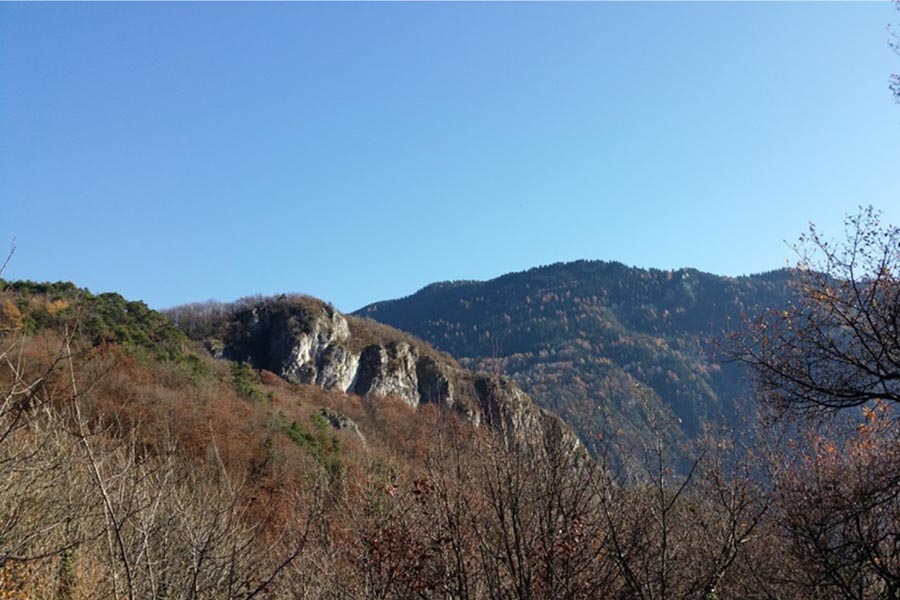
A few kilometres from Brides-les-Bains, overlooking the town of Moûtiers, Mont Secret Cliff is tucked away in pleasant surroundings, at an altitude of 800 metres.
Relatively extensive, the site is divided into 12 sectors and equipped with 140 routes.
Climbing enthusiasts will particularly enjoy the quality of the routes and the calmness of the location.
Praméruel in Courchevel
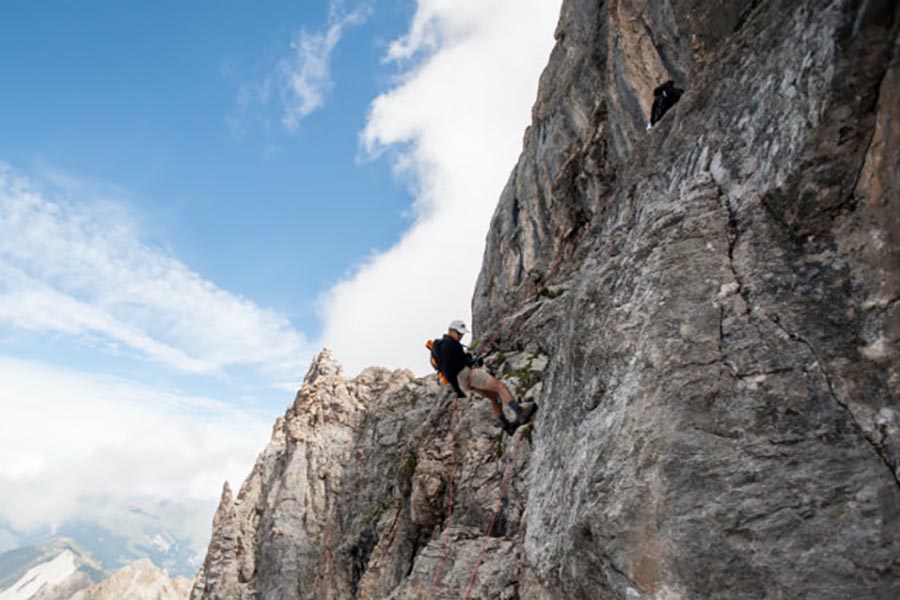
Between Moriond and Courchevel 1850, the climbing site of Praméruel has around fifty routes, spread over 8 sectors.
Most are for climbers with extensive experience.
Some, however, are accessible to beginners and a few are aimed at more experienced climbers.
Le Rocher du Glaisy
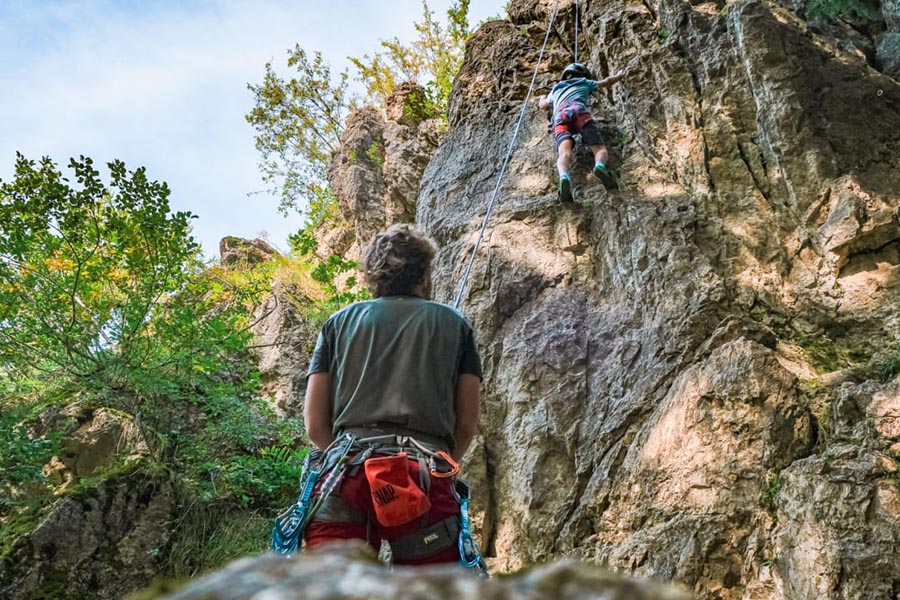
Around twenty kilometres from Brides-les-Bains, in Notre-Dame-du-Pré, le Rocher du Glaisy is perfect for climbing.
With 230 safe routes, it is appreciated by climbers of all levels and has a wonderful panoramic view, in the great outdoors.
Villette climbing wall
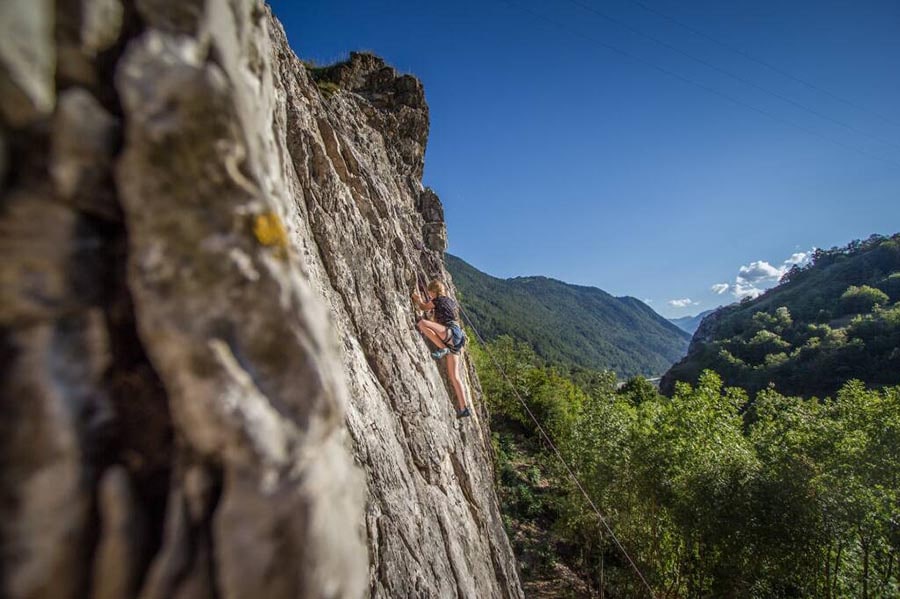
Not far from the town of Aime, around 20 minutes from Brides-les-Bains, the Villette climbing wall is easily accessible.
Aimed at beginners as well as experienced climbers, it has around forty routes.
Ziplining
If you want to try the unusual and fun experience of flying, ziplining is for you. Not far (as the crow flies!) from Brides-les-Bains, you’ll get a bird’s eye view!
Go higher!
Presented as a sort of taut metallic rope that you tie yourself to, ziplining allows you to fly over some incredible landscapes, at varying heights and speeds. Guaranteed thrills!
Ziplining sites near Brides-les-Bains
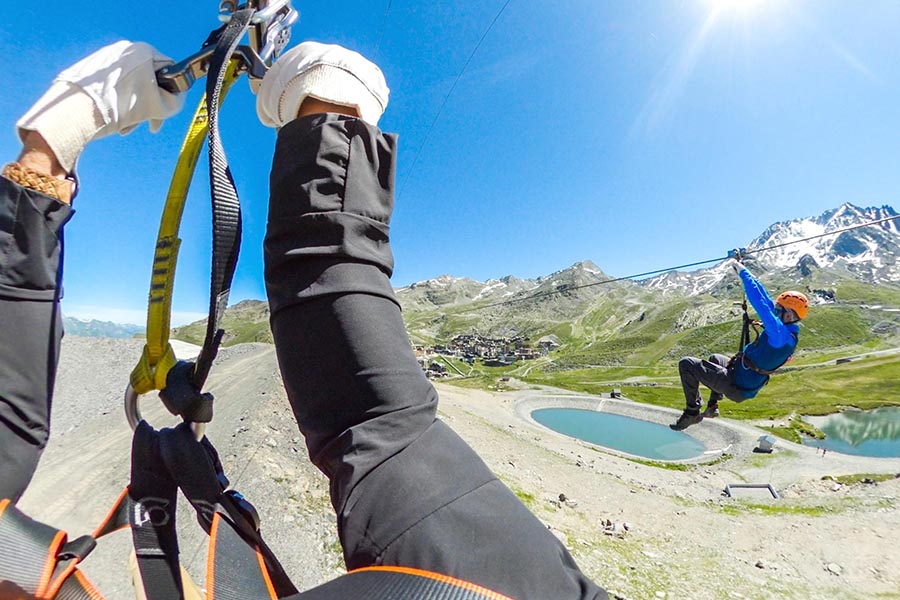
Val Thorens Bouchet Orelle zipline - Val Thorens
Perched at an altitude of 3000 metres, it is the highest mega zipline in the world! It flies (at 100 km/hour!) over one of the most beautiful glacial sites in Savoie, over a descent of 1300 metres.
La Bee Zipline in Val Thorens
With La Bee in Val Thorens, enjoy a duo flight in either summer or winter.
1800-metre descent, 80 km/hour, 65 metres high. Perfect for a double combination of pleasure and adrenaline!
Via Ferrata Le Cochet
Descriptive
Le Cochet dominates the village of Saint Martin de Belleville with it's stunning quartz cliff faces. It's on these east facing rock faces that you can enjoy our intermediate level via ferrata course.
A via ferrata is a climbing course which enables you to climb the rock face with the aid of iron rungs and other climbing aids attached to the rocks. You are attached to a "life line", a steel safety cable running along the whole length of the course to guarantee your safety.
Drop: 375m
Total length: 750m
Duration: 4 hours
Altitude at starting point: 1650m
Altitude at arrival 2025m
Time: 20 minutes
Required equipment: helmet, climbing belt, doubles length shock absorber.
Allow about an hour to walk back to the starting parking lot.
In order to carry out this activity you must have a good understanding of the mountains and and the risks attached. You carry out this activity at your own risk. If you have any queries, or are unsure please call one of the Belleville Valley mountain guides.
Practical Information
Opening Times :
From 15/05 to 31/10 daily.Subject to weather and snow conditions; please check with the tourist office.
Subject to favorable weather.
Languages spoken :
- English
- French
Tariffs
Payment methods